BMI explained: formula, adult categories and what BMI does not tell you
Body mass index (BMI) compares your weight with your height. It is a screening number, not a diagnosis.
The formulas
- Metric: BMI = weight in kg ÷ (height in metres)2
- Imperial: BMI = 703 × weight in pounds ÷ (height in inches)2
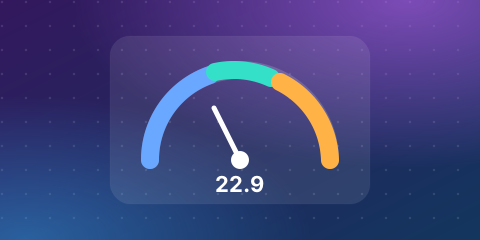
Example: 70 kg and 175 cm (1.75 m). BMI = 70 ÷ 3.0625 = 22.9.
Adult categories
| BMI | Category |
|---|---|
| Below 18.5 | Underweight |
| 18.5 to 24.9 | Healthy weight |
| 25.0 to 29.9 | Overweight |
| 30.0 and above | Obesity |
These ranges apply to adults. For children and teenagers, BMI is interpreted by age and sex using growth charts, so this calculator is not suitable for them.
 Skip the maths, try your own numbersBMI CalculatorFree, instant, no sign-up →
What BMI cannot show
- It does not separate muscle from fat, so athletes can have a high BMI with low body fat.
- It does not show where fat is stored.
- Some health bodies use different cut-offs for some populations.
Treat the result as one data point. For advice about your weight or health, talk to a doctor or other qualified clinician. Use the calculator below in metric or imperial units.
Examples in metric and imperial units
| Height | Weight | BMI | Category |
|---|---|---|---|
| 160 cm | 50 kg | 19.5 | Healthy weight |
| 170 cm | 80 kg | 27.7 | Overweight |
| 5 ft 9 in | 180 lb | 26.6 | Overweight |
| 5 ft 4 in | 130 lb | 22.3 | Healthy weight |
For imperial units, 703 × 180 ÷ 69² = 26.6. Always use total inches for height, so 5 ft 9 in is 69 inches.
Healthy weight range for your height
Rearrange the formula to get weight limits: weight = BMI × height². At 1.75 m, the 18.5 to 24.9 range corresponds to about 56.7 kg to 76.3 kg. This gives a useful range rather than a single target.
BMI for different populations
The categories above are the standard adult cut-offs used by the CDC and the World Health Organization. Research shows that health risks can rise at lower BMI in some groups, and the WHO suggests additional action points for Asian populations, with increased risk starting around a BMI of 23. Local guidelines may differ, for example in India and other South Asian countries. Your doctor can advise which thresholds suit you.
Children and teenagers
For people aged 2 to 19, BMI is compared with growth charts for the same age and sex and reported as a percentile. A fixed adult category does not apply. Use a paediatric growth chart or ask your child's doctor.
Limits of BMI
- It cannot distinguish muscle from fat, so strength athletes can be classified as overweight.
- It ignores where fat is stored. Fat around the waist carries different risks from fat elsewhere.
- It may misjudge older adults who have lost muscle mass.
- It does not account for pregnancy.
Other measures to use with BMI
Waist circumference, waist-to-height ratio, body fat percentage, blood pressure, blood glucose and cholesterol give a fuller picture. A common rule of thumb is to keep waist circumference below half your height. These measures are best discussed with a healthcare professional.
What to do with your result
If your BMI is outside the healthy range, it is a prompt to look at diet, activity, sleep and other health measures, not a diagnosis. Make changes that you can sustain, and speak to a doctor before starting a major diet or exercise programme, especially if you have a health condition.
Privacy
The calculator runs in your browser. Your height and weight are not stored or sent to a server.
Troubleshooting: common problems and fixes
- My BMI changed with a different tool. Check units and rounding. Some tools use different rounding or imperial constants.
- My BMI says overweight but I feel fit. BMI cannot separate muscle from fat. Talk to a doctor about other measures.
- The result looks wrong. Check that height is in the correct unit. A height typed in centimetres but chosen as metres gives a very wrong result.
- I am pregnant or under 18. Use guidance from a doctor, because adult BMI categories do not apply.
- I want a target weight. Use the healthy-range formula for your height as a guide, then get advice from a professional.
Is the BMI calculator accurate and private?
The calculation follows the standard formulas used by the CDC and WHO. It is a screening number, not a diagnosis, and it does not replace medical advice. Your height and weight are not stored or sent anywhere.
More free Zyphub tools you may need
- BMI Calculator: Metric or imperial units.
- Age Calculator: Exact age in years, months and days.
- Percentage Calculator: % of, % change, increase and decrease.
Frequently asked questions
How do I calculate BMI?
Divide weight in kilograms by height in metres squared. In imperial units, multiply weight in pounds by 703 and divide by height in inches squared.
What is a healthy BMI range for adults?
18.5 to 24.9 is classed as a healthy weight. Below 18.5 is underweight, 25 to 29.9 overweight and 30 or more obesity.
Is BMI accurate for athletes?
Not always. BMI cannot separate muscle from fat, so people with a lot of muscle can have a high BMI and low body fat.
Is BMI different for Asians?
Some guidelines use lower cut-offs for Asian populations, with risk increasing from about 23. Ask your doctor which applies to you.
Can I use this for my child?
No. Children’s BMI is interpreted by age and sex percentiles on growth charts, so ask a paediatrician or use a child-specific chart.
Is BMI the same for men and women?
The adult categories use the same cut-offs for men and women, but body composition differs, so BMI is only a rough guide.
What BMI is considered healthy?
18.5 to 24.9 for most adults, according to CDC and WHO categories.